Remote Work Poland-Norway - How to Settle It Most Advantageously
Remote Work Poland-Norway - How to Settle It Most Advantageously?
It happens that Poles receive an offer of remote work in Norway. Or the other way round: Poles living in Norway want to work remotely for a Polish employer.
We then ask ourselves: how do I settle this with the authorities? In which country do I have to pay contributions? What about tax? How do I do it so that it is most advantageous for me?
You will find the answer to these questions in this article.
The most important rules

- As a rule, social security contributions should be paid in only one country. If you have work/business both in Poland and Norway, you should pay ZUS only in the country of your tax residence.
- Income tax should also be paid depending on the place of tax residence, the place where the work is performed, and the form of settlement (employment or B2B - your own business).
Remote work from Poland for a Norwegian employer
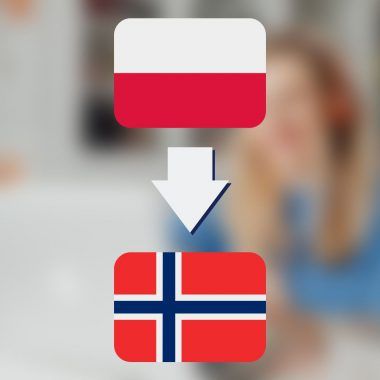 This is one of the most common situations among our compatriots, often in the IT sector.
Assuming that our tax residence is in Poland and we do not have a business in Norway, we have 3 additional options:
- We set up a business in Poland or use the one we already have and settle with the employer by issuing invoices to them. This is the simplest and most common way of settling with a foreign employer.
- If we have a business only in Poland, then we also pay ZUS only in Poland.
- In this situation, we also pay income tax only in Poland.
- We take up employment in a Norwegian company as a foreign employee. This creates additional difficulties and complications:
- We must register in Poland as a ZUS contribution payer and every month, on our own or with the help of an accountant, we report to ZUS.
- We must also pay income tax advances for ourselves, as if we were our own employer.
- We should send form A1 to Norway (obtainable from ZUS). This document exempts us from social security contributions.
- We also send a letter to the tax office in Norway (Skatteetaten) exempting us from taxes.
- In this situation, the employer transfers the full gross amount to our account and we settle it with the authorities ourselves.
- We include the entire income in the Polish tax return and tax it there.
- We take up employment in the Polish branch of a Norwegian company. This applies only if the Norwegian company has its branch in Poland.
- In this case, as standard, ZUS contributions, advances and tax are paid by the employer on our behalf. Exactly as if we were working for a Polish employer.
Remote work from Norway for a Polish employer
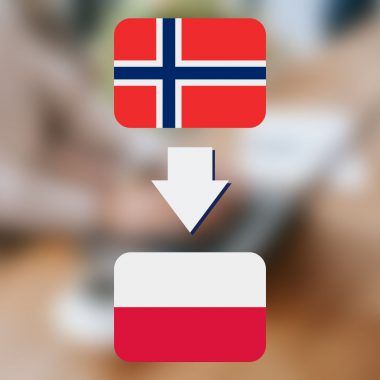 This is also a common situation, for example when our partner works in Norway and we want to live with them while not giving up our job in Poland. In such a situation:
- The most advantageous solution will be to set up a sole proprietorship in Norway, the so-called enkeltpersonforetak. This allows us, above all, apart from simplifying accounting and tax matters, to avoid restrictions arising from labour law, such as limits on working hours or holidays. With this form of cooperation:
- If we have a business only in Norway, then we pay social security contributions only in Norway.
- Any earnings should be taxed in Norway, and if we also work partly in Poland and have tax residence there - income from Poland should also be taxed in Poland.
- We take up employment in the Norwegian branch of a Polish company. This applies only if the Polish company has its branch in Norway.
- In this case, as standard, contributions, advances and tax are paid by the employer on our behalf. Exactly as if we were working for a Norwegian employer.
There are of course more solutions, but they can be problematic and not very cost-effective. The ones presented above are definitely the simplest and most cost-effective.